


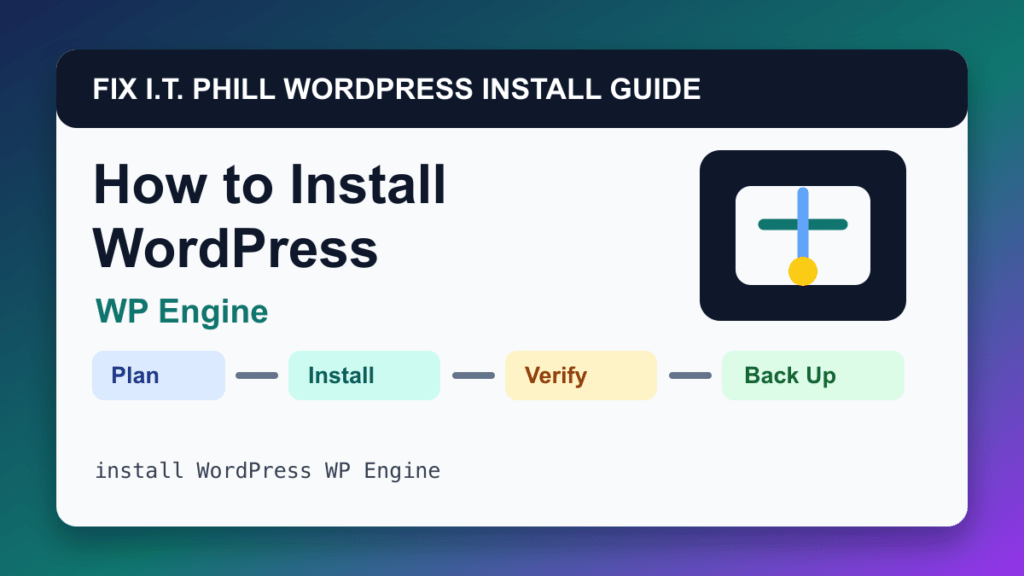
WP Engine User Portal is a good WordPress installation path when it matches the host and future maintenance plan. This method is best for managed WordPress sites that need staging, backups, caching, and support-backed hosting from day one.
Audience: business sites, agencies, developers, and teams using managed WordPress hosting. Before installing, decide who owns the site, where backups live, how updates happen, and what will happen if the first plugin or theme choice breaks the site.
Before install
- Know the plan owner email and account access.
- Decide whether the site starts blank, from a template, or from a migration.
- Plan domains, SSL, cache, backups, redirects, and environments.
- Check plugin restrictions and platform rules before building.
Install steps
- Open the WP Engine User Portal.
- Add or build a new site using the supported workflow.
- Choose the site type or template options.
- Complete the WordPress install and administrator setup.
- Review environments, backups, cache, and domain settings.
- Preview before pointing DNS.
Post-install verification
Check admin login, environment URLs, SSL, backups, cache behavior, plugin compatibility, redirects, forms, and launch checklist.
Also confirm public pages return 200, the dashboard loads over HTTPS, the administrator email can receive password resets, updates are visible, and a backup exists before you start building heavily.
Install risks
- Managed hosts may restrict some plugins or server-level changes.
- Email hosting is usually separate from WordPress hosting.
- DNS and redirects should be planned before launch.
Backup and rollback planning
A new WordPress site still needs a rollback plan. Create the first backup before installing large themes, builders, ecommerce extensions, membership tools, LMS plugins, or custom code. If this install is for a customer, document the host, login ownership, backup location, update policy, and launch checklist.
Fix I.T. Phill recommendation
Use WP Engine User Portal when it gives you the cleanest path to updates, backups, SSL, and support. Keep the install lean, verify it publicly, and connect it to the backup, restore, and migration guides before the site becomes important.
Related Fix I.T. Phill Guides
- How to Install WordPress: Complete Methods Guide
- How to Install WordPress by cPanel WP Toolkit
- How to Auto-Install WordPress for New cPanel Accounts
- How to Install WordPress by Plesk WP Toolkit
- How to Install WordPress by Softaculous
- How to Install WordPress by Installatron
- How to Install WordPress by DirectAdmin WordPress Manager
- How to Install WordPress Manually in cPanel
- How to Back Up WordPress: Complete Methods Guide
- How to Restore WordPress: Complete Recovery Methods Guide
- How to Migrate WordPress: Complete Hosting Move Guide
- WordPress 7.0: Safe Upgrade Checklist for Business Sites
- Install essential PHP extensions for WordPress in WHM/cPanel
- Help4 Network hosting and website support