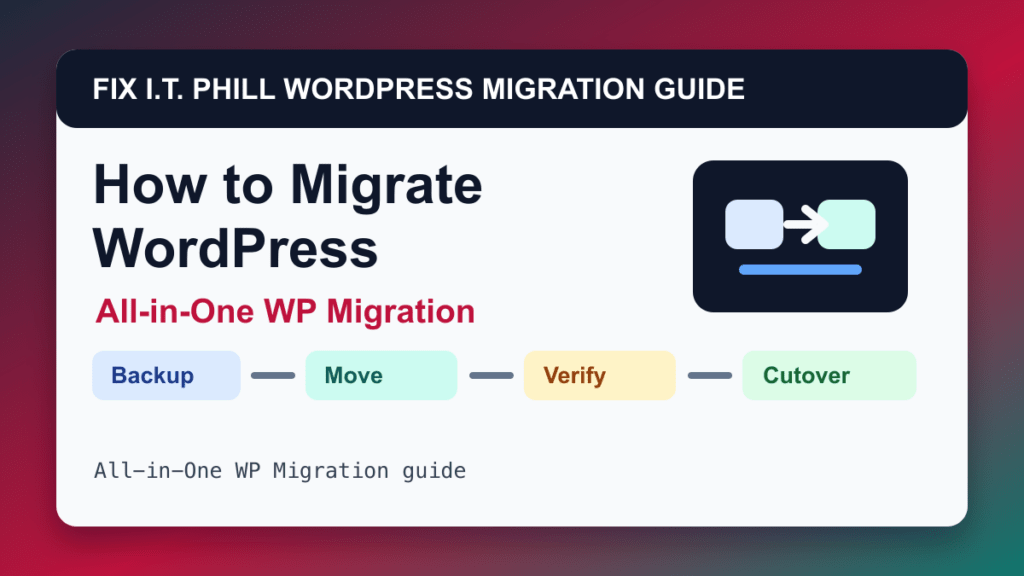
All-in-One WP Migration can move WordPress safely when it matches the source, destination, and risk level. This method is best for simple plugin-based exports and imports where WordPress remains accessible.
Audience: small sites, blogs, and business sites that fit the plugin workflow and hosting limits. Before using this path, decide whether the move changes hosts, domains, DNS, email, PHP versions, database versions, cache layers, or business data. Those details matter more than the migration button itself.
Before migration
- Confirm the site size fits the available import path and any extension limits.
- Create an independent backup before import.
- Prepare the destination WordPress install.
- Pause store orders or membership activity for the final import.
Migration steps
- Install All-in-One WP Migration on the source site.
- Create an export using the desired options.
- Download the export file or send it through supported storage.
- Install WordPress and the plugin on the destination.
- Import the package and follow the plugin prompts.
- Log in, save permalinks, and clear cache.
Post-migration verification
Check page content, images, menus, widgets, forms, plugins, user accounts, checkout, SSL, cache, and the destination backup plan.
Also check server logs, PHP errors, WordPress Site Health, cache behavior, CDN routing, redirects, robots/indexing state, cron jobs, and whether a new backup job exists on the destination.
Migration risks
- Upload-size and execution-time limits can block imports.
- Destination content can be replaced.
- Plugin-based migration may be less suitable for very large or damaged sites.
Rollback and cutover planning
Keep the old site online until the new site is proven. For stores, memberships, bookings, LMS sites, directories, and lead-generation sites, plan a final data freeze or sync so records do not split between servers. Keep DNS rollback notes, old-host access, and a verified backup until traffic and logs are stable.
Fix I.T. Phill recommendation
Use All-in-One WP Migration when it gives you the cleanest preview and rollback path. If the site makes money or stores customer records, treat the final cutover as a maintenance window, not a casual copy job.
Related Fix I.T. Phill Guides
- How to Migrate WordPress: Complete Hosting Move Guide
- How to Migrate WordPress by cPanel Full Account Backup
- How to Migrate WordPress by WHM Transfer Tool
- How to Migrate WordPress by Plesk Migrator
- How to Migrate WordPress by Plesk WP Toolkit Clone
- How to Migrate WordPress by Softaculous Clone or Import
- How to Migrate WordPress by Installatron Clone or Import
- How to Migrate WordPress by DirectAdmin Backup and Restore
- How to Back Up WordPress: Complete Methods Guide
- How to Restore WordPress: Complete Recovery Methods Guide
- How to Back Up WooCommerce Without Losing Orders
- How to Restore WooCommerce Without Losing Orders
- How to Test a WordPress Backup Restore Before an Emergency