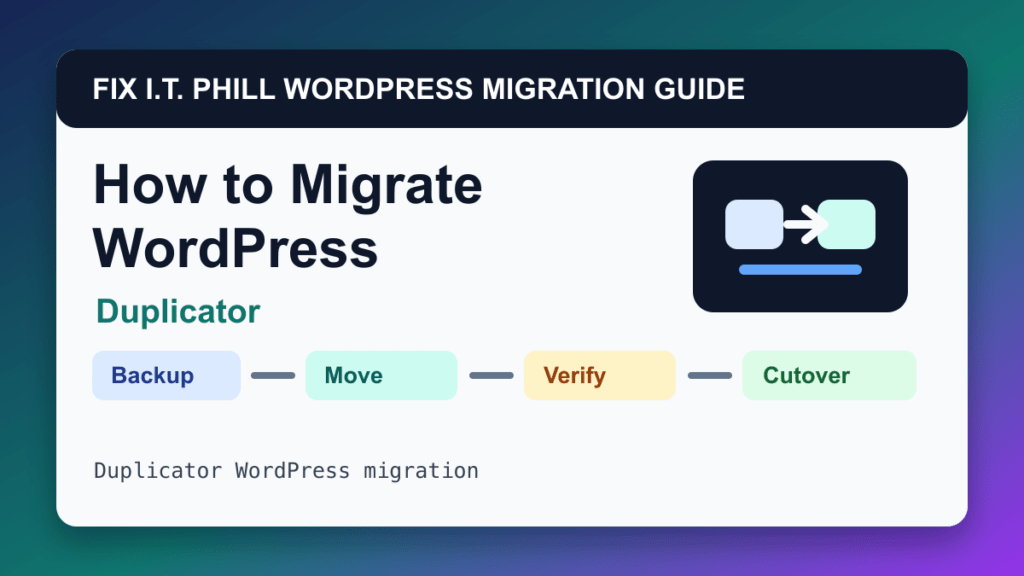
Duplicator can move WordPress safely when it matches the source, destination, and risk level. This method is best for packaging a complete WordPress site for a new host, new domain, staging copy, or recovery target.
Audience: site owners, freelancers, and agencies moving a single WordPress site between hosts or domains. Before using this path, decide whether the move changes hosts, domains, DNS, email, PHP versions, database versions, cache layers, or business data. Those details matter more than the migration button itself.
Before migration
- Create a host-level or plugin-level backup before building the package.
- Check package size limits and destination upload limits.
- Create the destination database and credentials if the workflow requires it.
- Freeze ecommerce or membership activity during final migration.
Migration steps
- Install Duplicator and build a package from the source site.
- Download the package files.
- Upload the package to the destination server.
- Run the installer through the documented Duplicator workflow.
- Enter destination database and URL settings carefully.
- Remove installer files and test the migrated site.
Post-migration verification
Check front-end pages, wp-admin, media, permalinks, plugin licenses, forms, checkout, cache, SSL, and the destination backup plan.
Also check server logs, PHP errors, WordPress Site Health, cache behavior, CDN routing, redirects, robots/indexing state, cron jobs, and whether a new backup job exists on the destination.
Migration risks
- Large sites can exceed package or upload limits.
- Installer files must be removed after migration.
- Search-replace and serialized data should be handled by the migration tool, not a plain text editor.
Rollback and cutover planning
Keep the old site online until the new site is proven. For stores, memberships, bookings, LMS sites, directories, and lead-generation sites, plan a final data freeze or sync so records do not split between servers. Keep DNS rollback notes, old-host access, and a verified backup until traffic and logs are stable.
Fix I.T. Phill recommendation
Use Duplicator when it gives you the cleanest preview and rollback path. If the site makes money or stores customer records, treat the final cutover as a maintenance window, not a casual copy job.
Related Fix I.T. Phill Guides
- How to Migrate WordPress: Complete Hosting Move Guide
- How to Migrate WordPress by cPanel Full Account Backup
- How to Migrate WordPress by WHM Transfer Tool
- How to Migrate WordPress by Plesk Migrator
- How to Migrate WordPress by Plesk WP Toolkit Clone
- How to Migrate WordPress by Softaculous Clone or Import
- How to Migrate WordPress by Installatron Clone or Import
- How to Migrate WordPress by DirectAdmin Backup and Restore
- How to Back Up WordPress: Complete Methods Guide
- How to Restore WordPress: Complete Recovery Methods Guide
- How to Back Up WooCommerce Without Losing Orders
- How to Restore WooCommerce Without Losing Orders
- How to Test a WordPress Backup Restore Before an Emergency