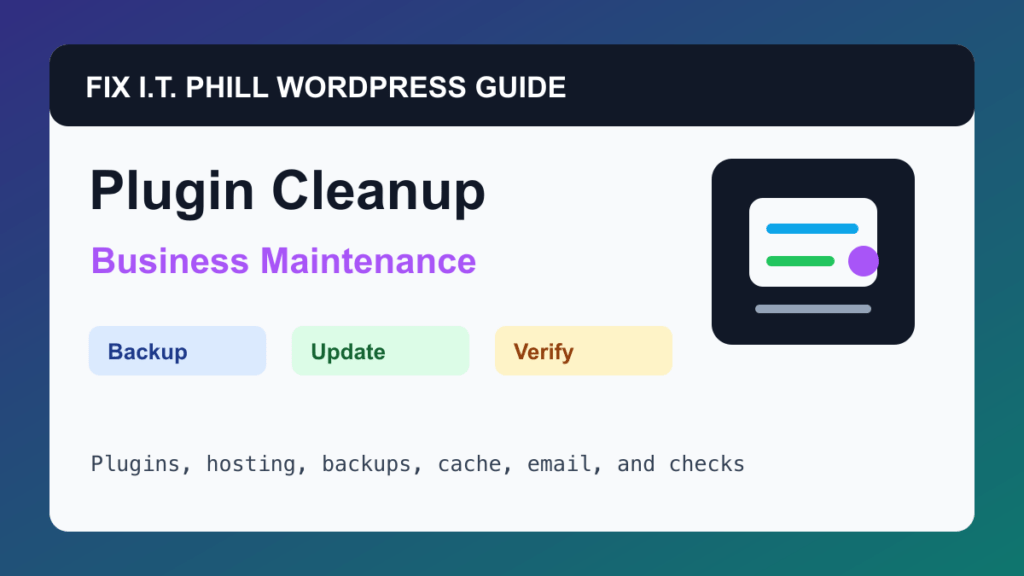
Clean Up Unused WordPress Plugins and Themes is a practical maintenance workflow for business sites that have accumulated inactive plugins, old themes, demo builders, unused form tools, and forgotten trial plugins.
A WordPress maintenance plan should prove the site still works after updates. That means checking the business workflow, hosting layer, plugins, backups, cache, email, and access before a small issue becomes an outage.
When To Run This Check
Run this quarterly and before major WordPress, PHP, theme, or hosting upgrades.
Before You Start
- Back up before deleting plugins or themes.
- Confirm whether an inactive plugin still owns shortcodes, widgets, custom fields, forms, galleries, or content.
- Check license ownership and renewal status before removing premium tools.
- Do not delete the active theme, child theme, or a known fallback theme.
Maintenance Steps
- List active plugins and the business purpose each one serves.
- Deactivate and remove plugins that have no owner, no use, or no update path after testing.
- Remove old themes while keeping the active theme, child theme, and one maintained fallback where appropriate.
- Replace abandoned plugins with maintained alternatives when the feature is still needed.
- Retest public pages, forms, checkout, layouts, and shortcodes after cleanup.
Hosting And Control Panel Notes
- Some control panels and security tools can show plugin status across multiple WordPress installs.
- Remove old plugin ZIP files and abandoned staging copies when safe.
- Cleaning up unused code reduces update noise and lowers maintenance risk.
Verify It Works
Confirm the site looks correct, required features still work, no broken shortcodes appear, and the plugin list is easier to own.
Backup And Rollback Notes
- Take a backup before changing plugins, themes, PHP, cache, DNS, checkout, forms, email, or user access.
- Use staging for risky changes on ecommerce, membership, booking, LMS, high-lead, or high-traffic sites.
- Keep rollback ownership clear: who restores, who approves, and how the site is verified afterward.
- Document the maintenance window and preserve version notes for future troubleshooting.
Related Fix I.T. Phill Guides
- WordPress Maintenance Checklist Hub
- How to Back Up WordPress: Complete Methods Guide
- How to Restore WordPress: Complete Recovery Methods Guide
- How to Migrate WordPress: Complete Hosting Move Guide
- How to Install WordPress: Complete Methods Guide
- How to Add Business Features to WordPress: Complete Plugin Setup Guide
- How to Build a WordPress Website for Any Business: Industry Setup Guide
- WordPress 7.0 Safe Upgrade Checklist for Business Sites
- Help4 Network hosting and website support