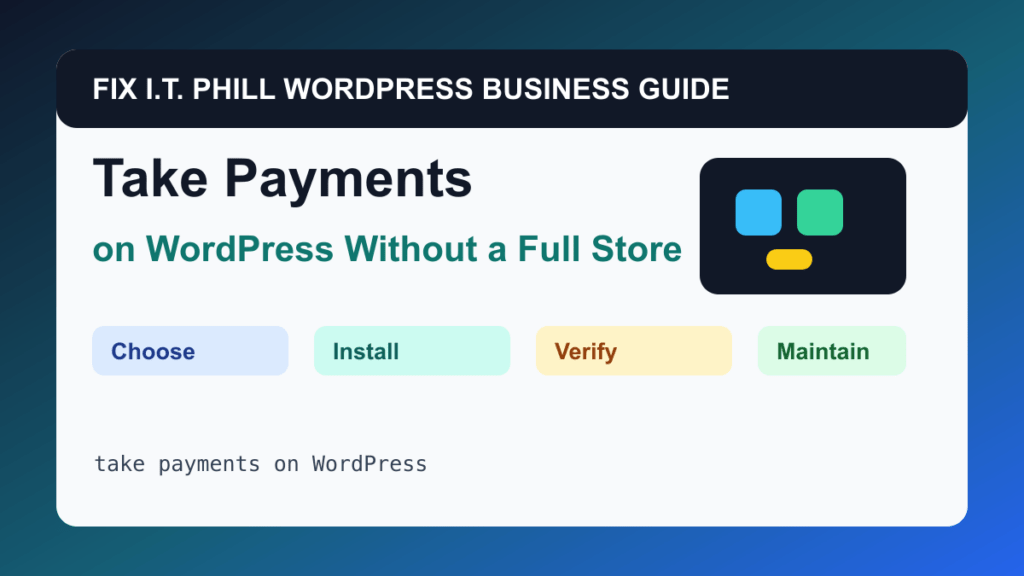
Take Payments on WordPress Without a Full Store is a practical WordPress upgrade when the site has a clear business job. This guide focuses on setup, verification, rollback planning, and plugin choice instead of installing random add-ons because they looked useful in a list.
This workflow helps consultants, schools, clubs, churches, event organizers, and service providers that need invoices, deposits, or one-time payments. Common tools include payment forms, WooPayments, Stripe, PayPal, donation plugins, booking plugins, or hosted payment links, but the right choice depends on maintenance status, support, hosting limits, budget, and how important the feature is to revenue or operations.
Before You Install
- Decide whether the payment is a donation, invoice, deposit, registration, or product.
- Confirm payment-provider fees and supported countries.
- Use SSL and a clear refund policy.
- Back up before adding payment plugins.
Setup Steps
- Choose a plugin or hosted payment path that matches the payment type.
- Connect the payment provider account.
- Create a test payment form or checkout page.
- Set confirmation emails and receipt text.
- Run test payments using the provider test mode.
- Switch to live mode only after verification.
Verify It Works
Confirm payment status, receipt emails, admin notifications, refund path, accounting export, and fraud/risk controls.
Rollback And Maintenance Notes
- Take a backup before installing or replacing plugins on a live business site.
- Install one major feature at a time so failures are easy to identify.
- Remove unused plugins after testing; deactivated clutter still becomes maintenance debt.
- Check the plugin changelog, support status, and compatibility before major WordPress or PHP updates.
- For high-value sites, test the workflow on staging before changing production.
Related Fix I.T. Phill Guides
- How to Add Business Features to WordPress: Complete Plugin Setup Guide
- How to Install WordPress: Complete Methods Guide
- How to Back Up WordPress: Complete Methods Guide
- How to Restore WordPress: Complete Recovery Methods Guide
- How to Migrate WordPress: Complete Hosting Move Guide
- How to Update WordPress Plugins, Themes, and Core Safely
- Help4 Network hosting and website support