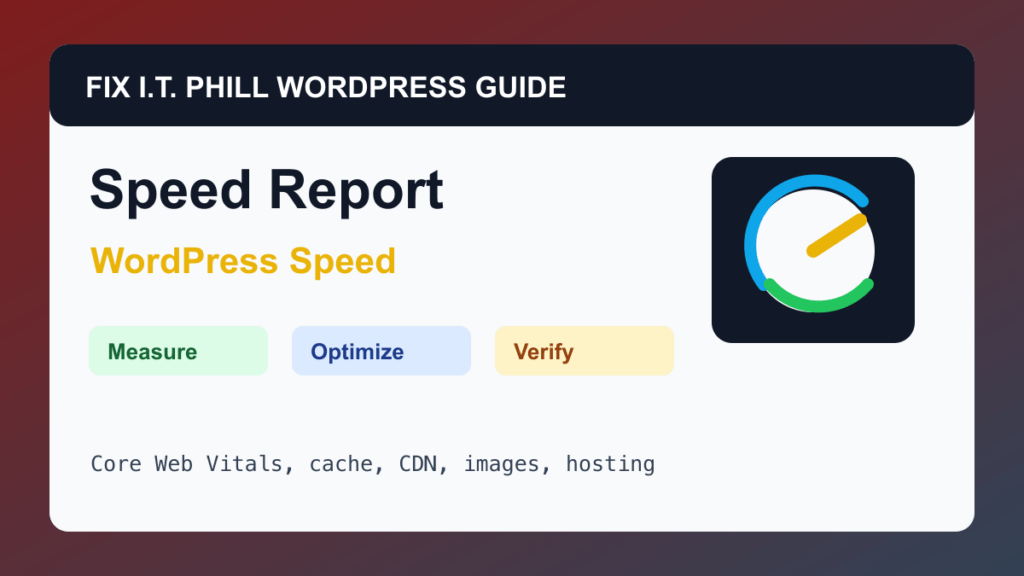
Write a WordPress Performance Report for Clients is for agencies, freelancers, hosts, and internal teams that need to explain speed work in business terms.
WordPress speed work should start with measurement and end with verification. A faster score is not useful if forms stop sending, checkout breaks, admin becomes unstable, or the site owner cannot repeat the maintenance process.
Before You Start
- Do not include private credentials, internal logs, or sensitive site details.
- Pick a small set of representative URLs.
- Capture before-and-after measurements.
- Separate confirmed fixes from recommendations.
Performance Steps
- Summarize the original performance problem in plain language.
- List the changes made: images, cache, CDN, plugins, fonts, hosting, database, or WooCommerce.
- Show before-and-after PageSpeed or Core Web Vitals results where useful.
- Document what was tested after the work: forms, checkout, booking, admin, mobile, and cache purge.
- Give the client a short next-action list with owners and priority.
Hosting And Control Panel Notes
- Reports should explain when hosting resources, DNS, CDN, database, or plugin architecture is the real bottleneck.
- For ecommerce, note checkout and order testing separately from cached page results.
- For recurring maintenance, performance reports should tie back to backup and rollback records.
Verify It Works
Confirm the report tells the client what improved, what still needs work, and what decision is needed next.
Backup And Rollback Notes
- Take a fresh backup before changing cache, CDN, image, database, PHP, theme, or plugin behavior.
- Use staging for WooCommerce, membership, LMS, booking, high-lead, and high-traffic sites.
- Change one performance layer at a time so rollback is possible.
- After every speed change, retest forms, checkout, booking, login, search, admin, mobile layout, and email where relevant.
Related Fix I.T. Phill Guides
- WordPress Performance Optimization Hub
- How to Maintain a WordPress Website: Complete Business Checklist
- How to Add Business Features to WordPress: Complete Plugin Setup Guide
- How to Install WordPress: Complete Methods Guide
- How to Back Up WordPress: Complete Methods Guide
- How to Restore WordPress: Complete Recovery Methods Guide
- How to Migrate WordPress: Complete Hosting Move Guide
- How to Build a WordPress Website for Any Business: Industry Setup Guide
- WordPress 7.0 Safe Upgrade Checklist for Business Sites