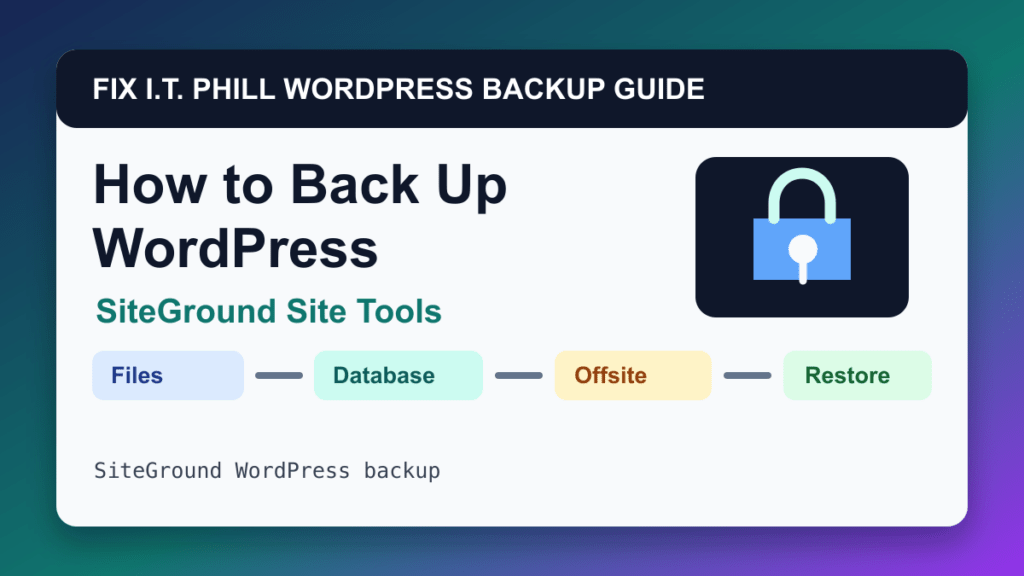
How to Back Up WordPress by SiteGround Site Tools is for SiteGround users who want a host-level backup before updates, migrations, or site redesigns. Use this method when host-managed daily restore points and manual backups before WordPress maintenance.
A good WordPress backup includes the website files and the database. The files carry themes, plugins, uploads, configuration, and custom code. The database carries posts, pages, users, settings, WooCommerce orders, booking records, form entries, menus, and plugin data. Before you change WordPress core, PHP, DNS, plugins, themes, checkout, or a page builder, make sure you know which backup contains both halves.
When this backup method makes sense
SiteGround Site Tools backups is a good fit when you already have that tool available and need a practical restore path. It is especially useful before updates, redesign work, hosting migrations, malware cleanup, PHP changes, database work, and plugin troubleshooting.
Before you begin
- Confirm the WordPress URL and document root so you back up the right site.
- Find the database name in
wp-config.phpor the hosting panel. - Check free disk space; many backup failures start with a full account.
- Pause risky work until the backup finishes and you can see the file.
- For stores and booking sites, note the last order, booking, or form entry before the backup.
Backup steps
- Log in to SiteGround Client Area and open Site Tools for the site.
- Go to Security and Backups.
- Create an on-demand backup before core, plugin, theme, or PHP changes.
- Confirm the backup appears in the backup list with the expected date.
- Download a full backup when you need an offline copy or migration safety file.
- Pair SiteGround backups with plugin/offsite backups for higher-risk stores and client sites.
Automated backups and cron
SiteGround maintains hosting-level backups according to plan and policy. On-demand backups are still valuable before major changes because they mark a known-good moment.
For WordPress plugin backups, remember that WordPress scheduled tasks often depend on WP-Cron. WP-Cron runs when WordPress receives traffic and notices a task is due. That is fine for many small sites, but low-traffic sites can run late. For business-critical sites, pair plugin schedules with a real server cron, hosting-panel backups, or provider backups where available.
How to test restore readiness
Restore from Site Tools. If the site processes orders or leads, export new transactional data before restoring an older database.
Do not test your only restore for the first time during an outage. Use a staging copy, temporary subdomain, local development environment, or provider restore preview when available. After restore, check login, home page, important pages, media, forms, checkout, email delivery, permalinks, and cache behavior.
Common mistakes
- Depending only on host backups without downloading critical restore points.
- Restoring the whole site when only a file or database piece was needed.
- Not checking plan limits for on-demand backups.
- Skipping a fresh backup before staging push or PHP changes.
Where to store the backup
Keep at least one copy outside the web server. Good destinations include your own Google Drive, Dropbox, OneDrive, S3-compatible storage, Backblaze B2, Wasabi, SFTP, a provider backup vault, or a secure internal backup server. The exact tool matters less than the restore test, retention policy, and separation from the production account.
Fix I.T. Phill recommendation
Use SiteGround Site Tools backups as one layer, not the whole plan. Keep a second backup path for important sites, especially WooCommerce, bookings, memberships, and agency-managed sites. Before major updates, take a fresh manual backup even if automatic backups are already scheduled.
Related Fix I.T. Phill guides
- Complete WordPress backup methods guide
- How to Back Up WordPress: Complete Methods Guide
- How to Back Up WordPress by cPanel Backup Wizard
- How to Back Up WordPress by cPanel File Manager and phpMyAdmin
- How to Back Up WordPress by WHM Full Account Backups
- How to Back Up WordPress by cPanel WP Toolkit
- WordPress 7.0 safe upgrade checklist
- Install essential PHP extensions for WordPress in WHM/cPanel
- Disable WordPress plugins with phpMyAdmin when wp-admin is broken
- Help4 Network hosting and website support