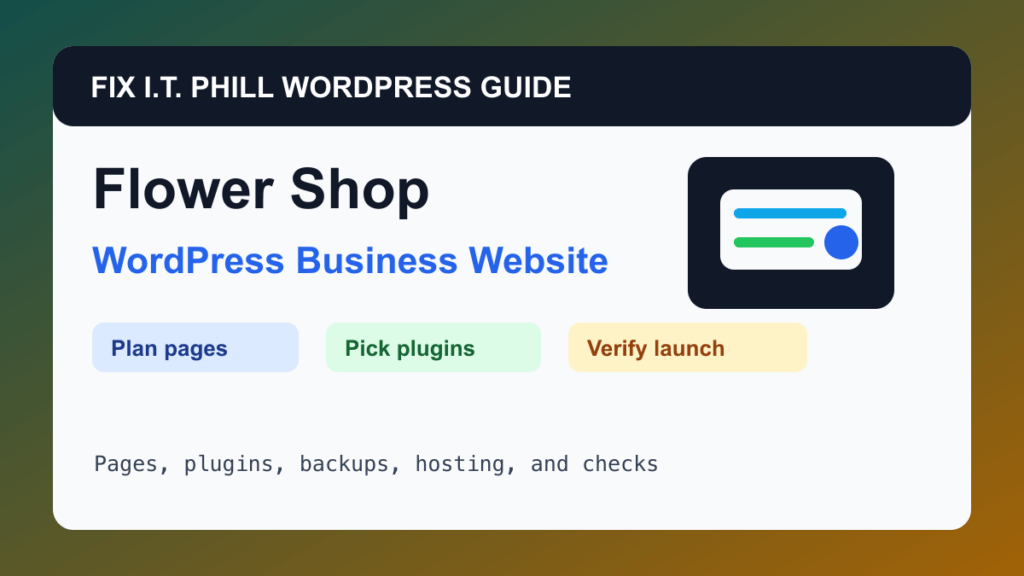
Build a WordPress Website for a Flower Shop is mostly a planning problem before it is a plugin problem. This guide is for florists that need local search visibility, seasonal arrangement pages, online inquiries, delivery information, and optional ecommerce.
The right WordPress build starts with the job the site must do: get calls, book appointments, sell products, collect leads, publish events, support members, or help buyers make a decision. Pick plugins only after that workflow is clear.
Recommended WordPress Stack
- location and delivery pages
- gallery or portfolio blocks
- contact/order inquiry form
- WooCommerce or simple payment form if selling online
- Google Site Kit, SEO plugin, cache plugin, and backups
Before You Build
- List service areas, delivery rules, pickup hours, holidays, and substitution policy.
- Prepare real bouquet photos with useful filenames and alt text.
- Decide whether the site takes full online orders or quote requests only.
- Back up before adding ecommerce or form plugins.
Setup Steps
- Create Home, Flowers, Delivery, Weddings, Sympathy, About, Contact, and Service Areas pages.
- Add a maintained form plugin for custom arrangement requests.
- Use WooCommerce only if the shop will manage products, checkout, taxes, and inventory.
- Add Google Business Profile links, map details, phone tap links, and clear hours.
- Install analytics, SEO, cache, security, and backup plugins.
- Test mobile ordering, form delivery, and checkout before launch.
Verify It Works
Confirm forms, phone links, delivery pages, checkout if used, image speed, local search metadata, and map/address consistency.
Backup And Maintenance Notes
- Take a backup before installing or replacing major plugins.
- Use staging for payment, booking, membership, LMS, cache, or CRM changes when the site is already earning money.
- Keep plugin count intentional; remove unused plugins instead of leaving them disabled forever.
- Document who owns updates, renewals, form notifications, backups, DNS, email, and emergency access.
- After launch, verify forms, checkout, booking, login, search, cache, analytics, and email at least monthly.
Related Fix I.T. Phill Guides
- Industry Website Setup Hub
- How to Add Business Features to WordPress: Complete Plugin Setup Guide
- How to Install WordPress: Complete Methods Guide
- How to Back Up WordPress: Complete Methods Guide
- How to Restore WordPress: Complete Recovery Methods Guide
- How to Migrate WordPress: Complete Hosting Move Guide
- How to Update WordPress Plugins, Themes, and Core Safely
- Help4 Network hosting and website support