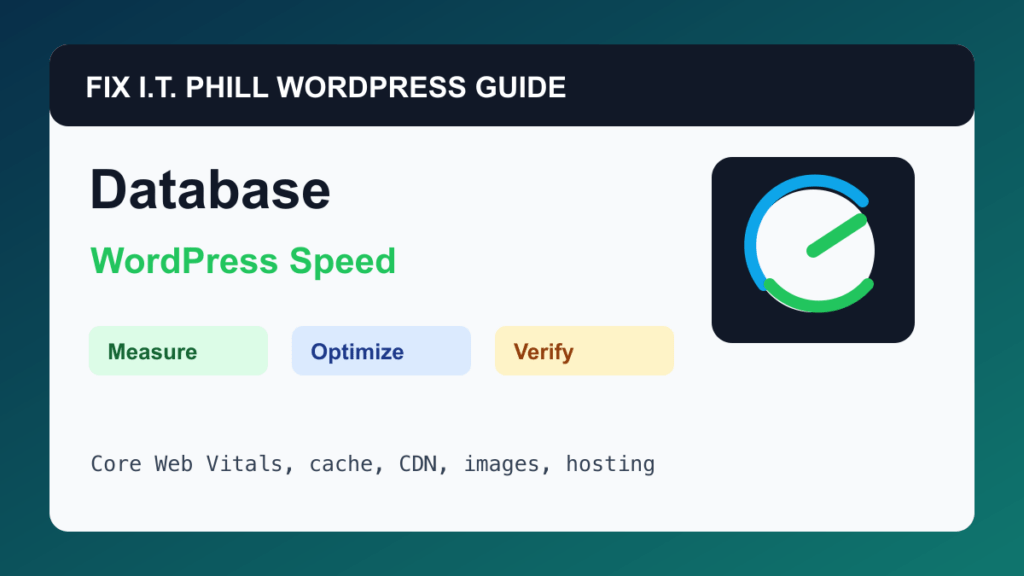
Clean a WordPress Database Safely is for sites with years of revisions, transients, abandoned plugin tables, large options, stale sessions, or slow admin screens.
WordPress speed work should start with measurement and end with verification. A faster score is not useful if forms stop sending, checkout breaks, admin becomes unstable, or the site owner cannot repeat the maintenance process.
Before You Start
- Take a database backup before cleanup.
- Check whether WooCommerce, membership, LMS, booking, forum, or directory plugins store business records in custom tables.
- Do not delete unknown tables on production without plugin ownership research.
- Use staging for large cleanup on important sites.
Performance Steps
- Identify large tables and large autoloaded options before deleting anything.
- Clean safe items first: expired transients, old revisions, spam comments, and trash where appropriate.
- Review abandoned plugin tables only after confirming the plugin is gone and no data is needed.
- Optimize through trusted tools or host controls rather than manual guesses.
- Retest admin, search, checkout, login, scheduled tasks, and backups afterward.
Hosting And Control Panel Notes
- Database cleanup can reduce backup size, restore time, migration time, and admin slowness.
- If database CPU or I/O is saturated, cleanup may need to be paired with better hosting.
- Stores and membership sites require extra care because old records may be legally or operationally needed.
Verify It Works
Confirm the database backup exists, site behavior is unchanged, admin is stable, and backup size or query pressure improved.
Backup And Rollback Notes
- Take a fresh backup before changing cache, CDN, image, database, PHP, theme, or plugin behavior.
- Use staging for WooCommerce, membership, LMS, booking, high-lead, and high-traffic sites.
- Change one performance layer at a time so rollback is possible.
- After every speed change, retest forms, checkout, booking, login, search, admin, mobile layout, and email where relevant.
Related Fix I.T. Phill Guides
- WordPress Performance Optimization Hub
- How to Maintain a WordPress Website: Complete Business Checklist
- How to Add Business Features to WordPress: Complete Plugin Setup Guide
- How to Install WordPress: Complete Methods Guide
- How to Back Up WordPress: Complete Methods Guide
- How to Restore WordPress: Complete Recovery Methods Guide
- How to Migrate WordPress: Complete Hosting Move Guide
- How to Build a WordPress Website for Any Business: Industry Setup Guide
- WordPress 7.0 Safe Upgrade Checklist for Business Sites