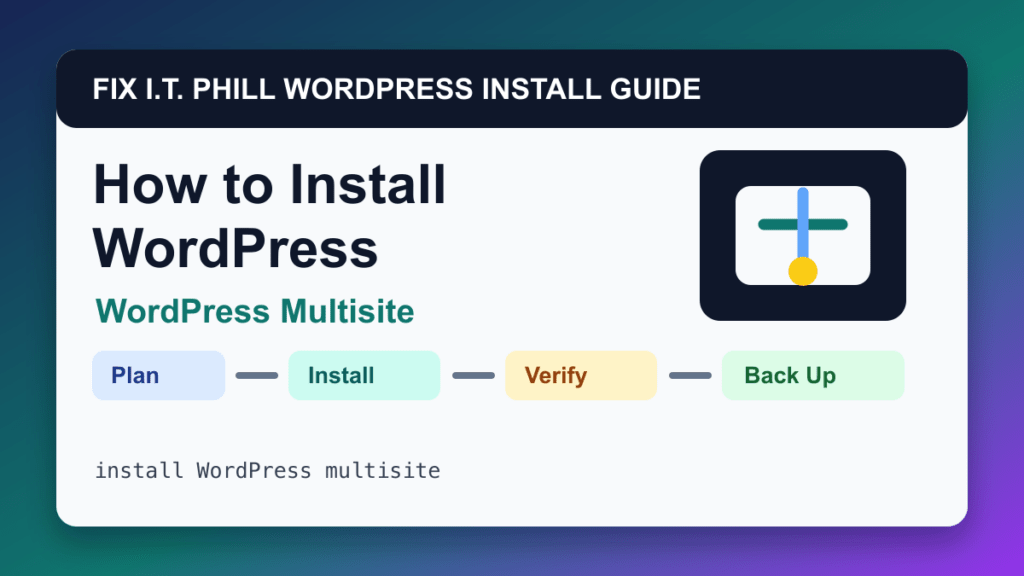
WordPress multisite lets one WordPress installation run a network of sites. It is useful when the sites share ownership, hosting, governance, plugins, themes, and maintenance. It is not magic, and it is not always simpler than separate WordPress installs.
Use multisite when you need one network for a school, franchise, agency demo system, internal department sites, regional pages, event microsites, or a controlled group of related sites. Use separate WordPress installs when each site needs its own stack, separate risk boundary, separate plugin freedom, separate restore schedule, or separate billing and ownership.
Good reasons to use multisite
- You manage many related sites under one organization.
- You want central plugin and theme control.
- You want one update workflow instead of many separate core installs.
- Subsites should share users or a common login experience.
- Each location, department, or client needs its own site area but not its own server stack.
Bad reasons to use multisite
- You only want pages to look different. A normal site with templates may be cleaner.
- You need strong isolation between customers.
- Each site owner needs full plugin/theme freedom.
- You expect to restore one site often without touching the rest of the network.
- You are trying multisite on production without a backup because it sounds neat.
Before enabling multisite
WordPress explicitly tells admins to back up files and the database before creating a network. It also recommends verifying pretty permalinks and deactivating active plugins before the network is created.
- Take a full backup and know how to restore it.
- Decide subdomains versus subdirectories before launch.
- For subdomains, prepare DNS and wildcard DNS only if the network needs on-demand subdomains.
- For mapped domains, plan SSL for every public domain.
- Deactivate active plugins before setup and reactivate only what survives testing.
- Do this in staging first when the site already matters.
Enable the Network Setup screen
Add the multisite allowance to wp-config.php above the stop-editing line:
/* Multisite */
define( 'WP_ALLOW_MULTISITE', true );
Then refresh wp-admin and open Tools > Network Setup. Choose subdomains or subdirectories if WordPress gives you the option, review the network title and super admin email, and click Install.
Apply the generated config carefully
WordPress will generate settings for wp-config.php and server rules for Apache or Nginx. Use the exact settings from your screen because they are customized for the install. Save copies of the old files first.
After editing the files, log in again. You should now see My Sites > Network Admin in the admin bar when logged in as a super admin.
First verification
- Create one test subsite.
- Visit its dashboard and public page.
- Confirm uploads work on the subsite.
- Enable one known-good theme and plugin path.
- Check permalinks, SSL, sitemap behavior, cache behavior, and email.
- Run a fresh network backup after the network is stable.
What to tell clients
Tell clients multisite is a governance choice, not just a feature. It makes sense when the network should be managed together. It is a poor fit when every site needs to behave like an independent hosting account.
Related Fix I.T. Phill guides
- How to Back Up WordPress
- How to Restore WordPress
- How to Migrate WordPress
- WordPress Multisite Backup Guide
- WordPress Multisite Restore Guide