WordPress Credits has a new mid-year update, and it is worth a look if you run a WordPress agency, teach web development, mentor new contributors, or hire entry-level WordPress talent. This is not a security alert. It is a WordPress ecosystem item with a practical action path: agencies and schools can help students connect classroom work to real WordPress contribution.
The June 29, 2026 Make WordPress update says WP Credits has already reached more than 20 school partnerships, tested two pilot approaches, and is shifting the next six months toward quality, retention, sponsorship, and a measured goal of 35 partnerships by the end of 2026.
What Changed
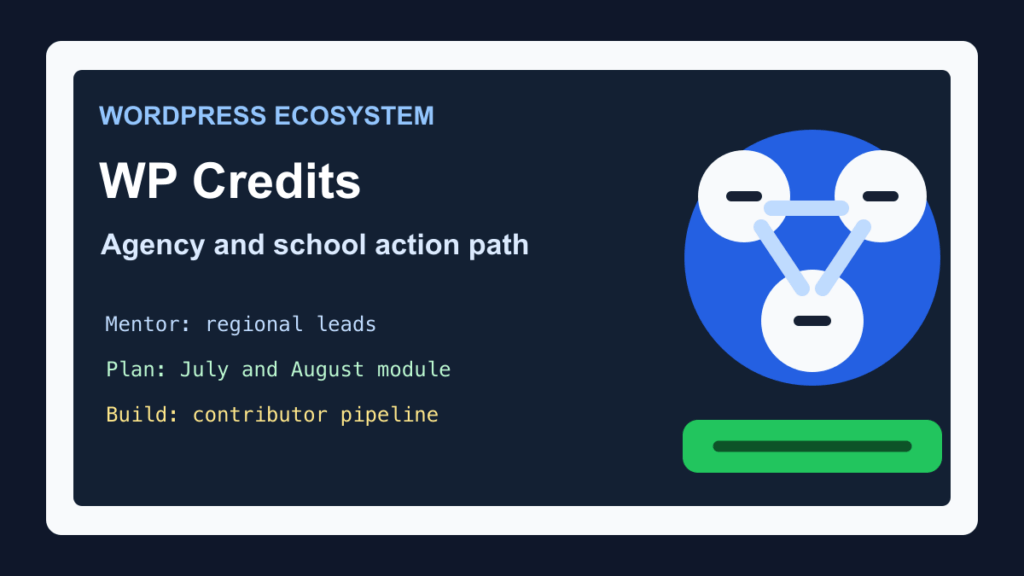
- Mentorship is getting more structured. The update says a self-onboarding-first pilot was not effective, so the program is moving toward regional leads coordinating mentors in their regions.
- A condensed 50-hour module worked. WordPress Credits plans to run that module again in July and August.
- The partnership target is moving. The program already passed its 20+ partnership goal and now aims for 35 partnerships by the end of 2026, with an emphasis on new countries and cities.
- The second half of 2026 is about quality. Planned work includes a public dashboard, alternative contribution paths, student feedback analysis, a graduate retention program, and a broader sponsorship base for mentors.
Why Agencies And Hosting Teams Should Care
Most small businesses do not need to follow every Make WordPress program update. Agencies and hosting teams are different. If you maintain WordPress sites for clients, train junior staff, build plugins or themes, or support community events, this program can become a practical contributor and hiring pipeline.
The useful question is not “Can we sponsor everything?” It is “Can we offer one clear, safe path for a student to contribute without touching production client systems?” That might mean mentoring documentation work, testing, translation, training material, accessibility review, support triage, local event help, or other contribution work that fits the student and the mentor capacity.
Practical Next Steps
- Decide whether your organization can mentor, sponsor, or introduce. A web agency, host, school, or local tech group can help by connecting the program to the right people rather than trying to invent a program from scratch.
- Review the official WP Credits program page. Use the program page as the source of truth before promising students, schools, or sponsors anything.
- Join the WordPress Slack conversation. The Make WordPress update points people to the
#wpcreditschannel for program participation. - Prepare low-risk contribution work. Keep students away from live client credentials, production data, private customer tickets, and unmanaged plugin changes. Use public contribution paths, staging, documented tasks, and mentor review.
- Plan around the July and August module timing. If your team can help with mentoring or school introductions, now is the time to get the conversation started.
Safe Boundaries For Businesses
If you involve students or new contributors, keep business risk controlled. Do not hand over production access to client WordPress sites, billing systems, cPanel accounts, DNS, email, backups, or private repositories. Give contributors scoped work, clear review, and public contribution channels wherever possible.
For agencies, the win is not free labor. The win is a healthier WordPress contributor pipeline, better-trained juniors, stronger local relationships, and clearer paths from education into real open-source work.